
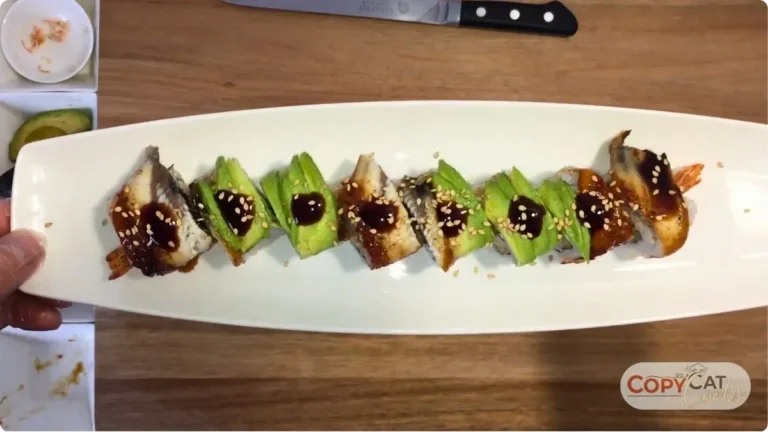

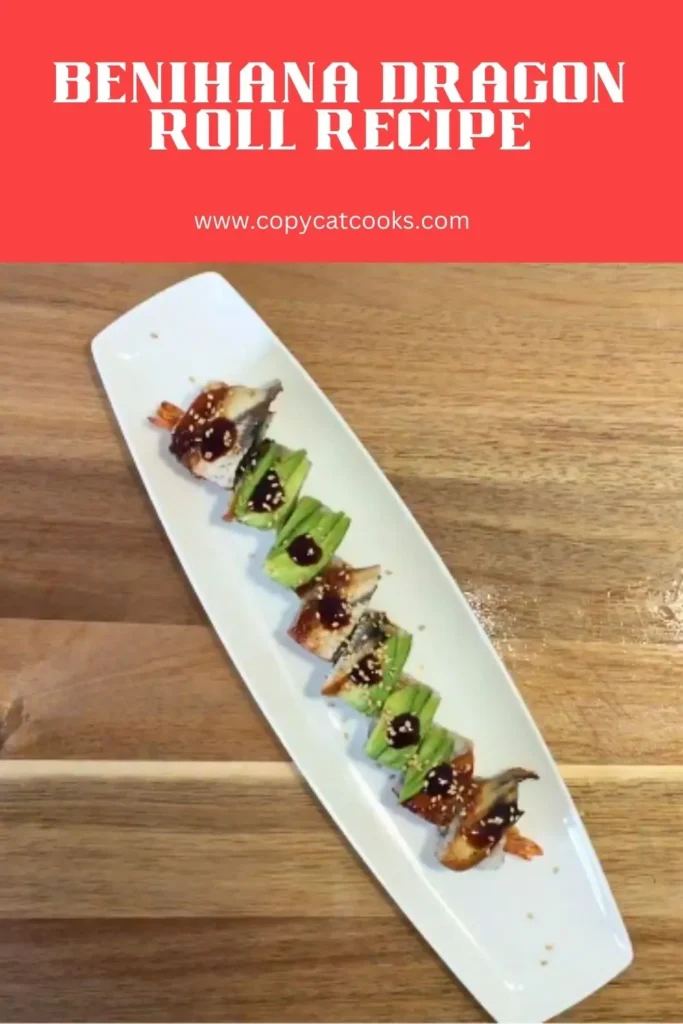
If you’ve ever dined at Benihana and been mesmerized by their stunning dragon roll, you’re not alone. This copycat Benihana dragon roll recipe brings the restaurant’s signature artistry straight to your kitchen.
With its crispy shrimp tempura core, buttery avocado “scales,” and glossy eel sauce drizzle, this show-stopping sushi creation is easier to make than you might think. Whether you’re planning a special dinner or want to impress guests with restaurant-quality sushi, this Benihana dragon rolls recipe delivers both visual drama and incredible flavor.
Let’s dive into crafting this Japanese masterpiece that looks as magnificent as it tastes.
What Does the Benihana Dragon Roll Taste Like?
The Benihana dragon roll is a harmonious symphony of textures and flavors that dance on your palate. Each bite delivers the satisfying crunch of shrimp tempura against pillowy sushi rice, while creamy avocado provides a buttery richness that melts in your mouth.
The tender, slightly sweet unagi (freshwater eel) adds an umami depth that’s perfectly complemented by the tangy-sweet eel sauce. Crisp cucumber offers refreshing contrast, and the spicy mayo brings a gentle kick of heat.
The sesame seeds contribute a subtle nuttiness, tying all elements together into a complex yet balanced flavor profile that’s simultaneously indulgent and refined.
Ingredients and Kitchen Utensils
Ingredients:
For the Roll:
- 2 cups prepared sushi rice (seasoned with sushi vinegar)
- 1 sheet nori (dried seaweed), cut in half
- 4 pieces shrimp tempura (crispy fried)
- 1 medium cucumber, julienned into thin strips
- 2 ripe avocados, sliced paper-thin
- 4-6 slices cooked unagi (freshwater eel)
For Garnish:
- Eel sauce (unagi tare), 3-4 tablespoons
- Spicy mayo, 2-3 tablespoons
- Toasted sesame seeds, 1 tablespoon
- Pickled ginger (optional)
- Wasabi (optional)
Kitchen Utensils:
- Bamboo sushi rolling mat (makisu)
- Plastic wrap
- Sharp chef’s knife or sushi knife
- Small bowl of water (for dampening knife)
- Cutting board
- Rice paddle or wooden spoon
- Small mixing bowls for sauces
Preparation and Cooking Time
Prep Time: 25 minutes
Cooking Time: 15 minutes (for tempura if making fresh)
Total Time: 40 minutes
Servings: 2 dragon rolls (16 pieces total)
Difficulty Level: Intermediate
Benihana Dragon Roll Recipe Instructions
Step 1: Prepare Your Workspace
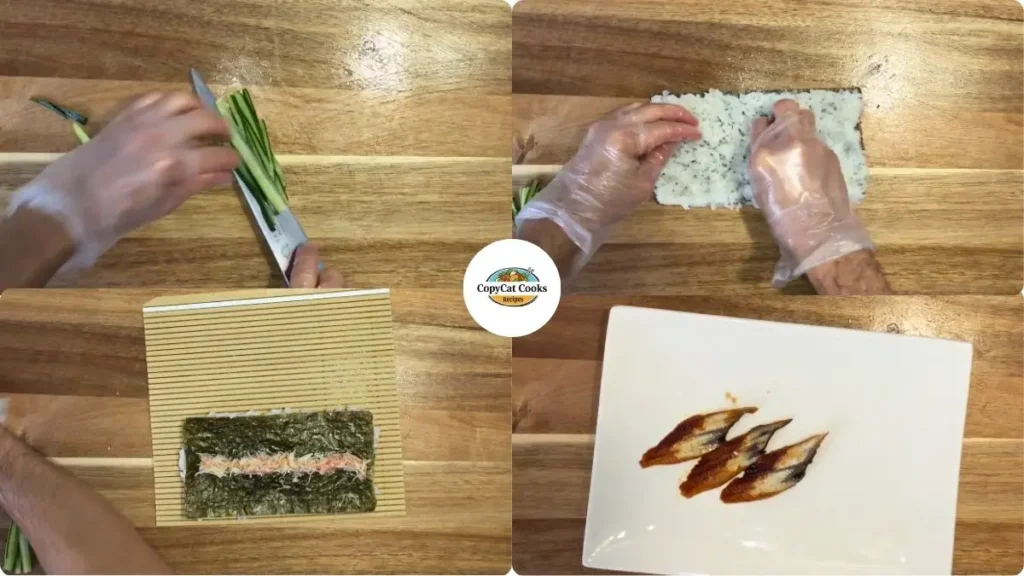
Wrap your bamboo rolling mat completely in plastic wrap to prevent rice from sticking. Have a small bowl of water nearby for keeping your hands damp while working with sushi rice. Arrange all ingredients within easy reach for smooth assembly.
Step 2: Lay the Foundation
Place half a sheet of nori, shiny side down, on your plastic-wrapped bamboo mat. With dampened hands, spread approximately 1 cup of seasoned sushi rice evenly across the entire nori sheet, leaving no gaps. The rice layer should be about ¼-inch thick for optimal texture.
Step 3: Create the Inside-Out Roll
Carefully flip the nori sheet so the rice is now facing down on the bamboo mat. The nori should be on top, ready to receive your fillings. This uramaki (inside-out) technique is essential for authentic Benihana dragon rolls.
Step 4: Add Core Ingredients
Arrange 2 pieces of shrimp tempura horizontally across the center of the nori, with tails hanging slightly over the edge if desired. Place 2-3 slices of unagi alongside the shrimp, then add a line of julienned cucumber strips for that refreshing crunch.
Step 5: Execute the Roll
Lift the edge of the bamboo mat closest to you and begin rolling away from your body, using firm but gentle pressure. Tuck the initial edge tightly to create a compact cylinder. Continue rolling while maintaining even pressure until you’ve formed a complete cylinder. Remove the mat.
Step 6: Apply the Dragon Scales
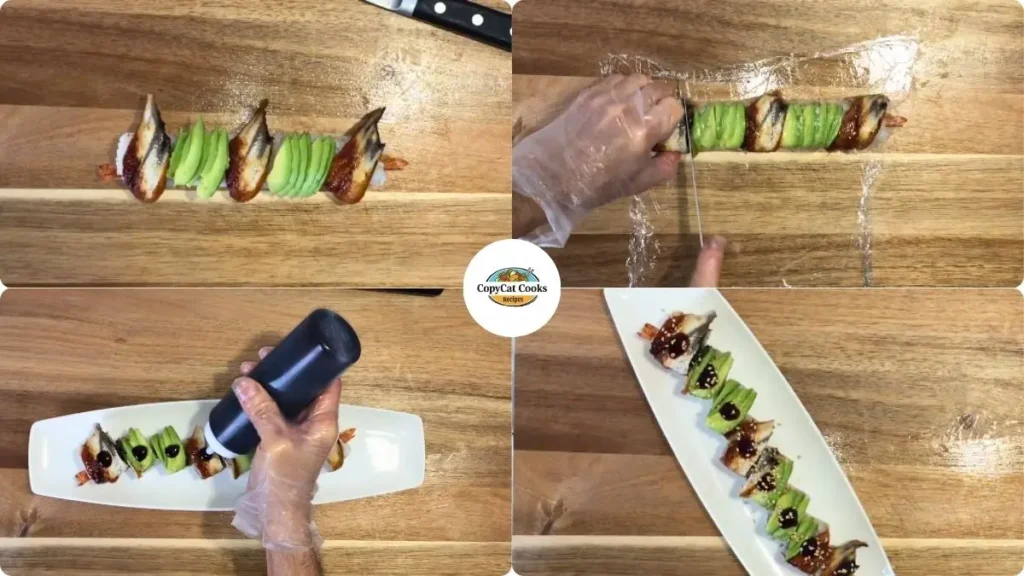
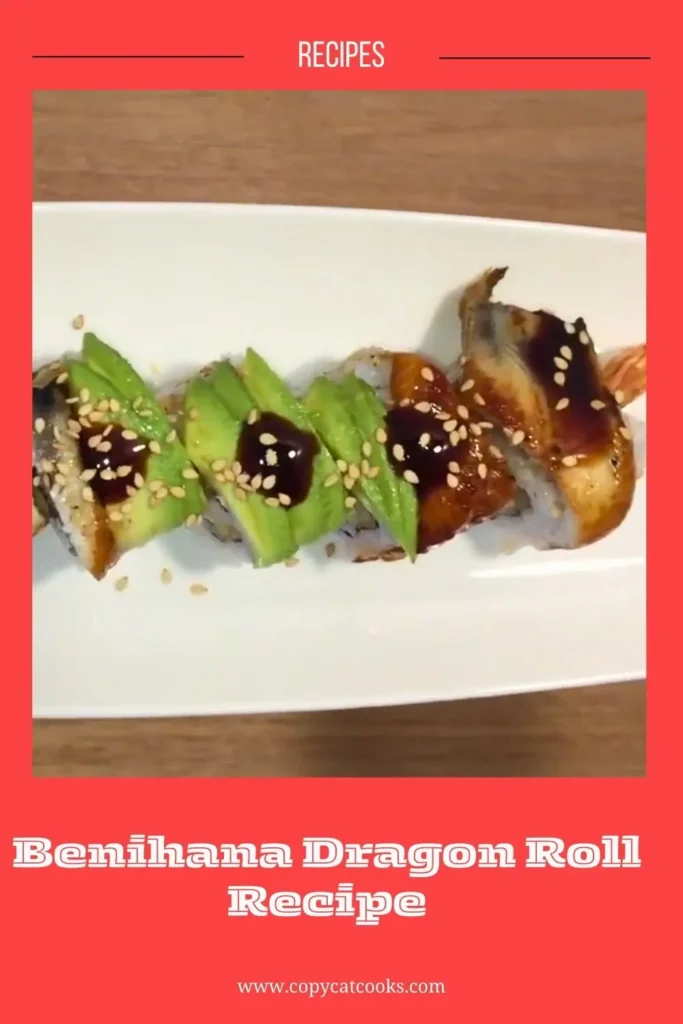
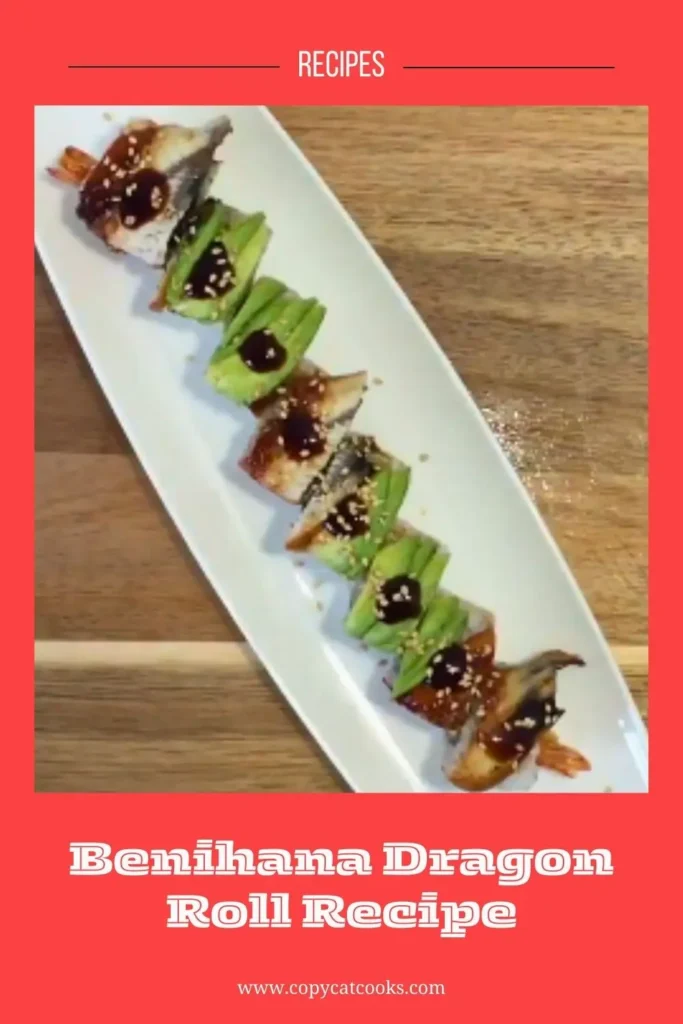
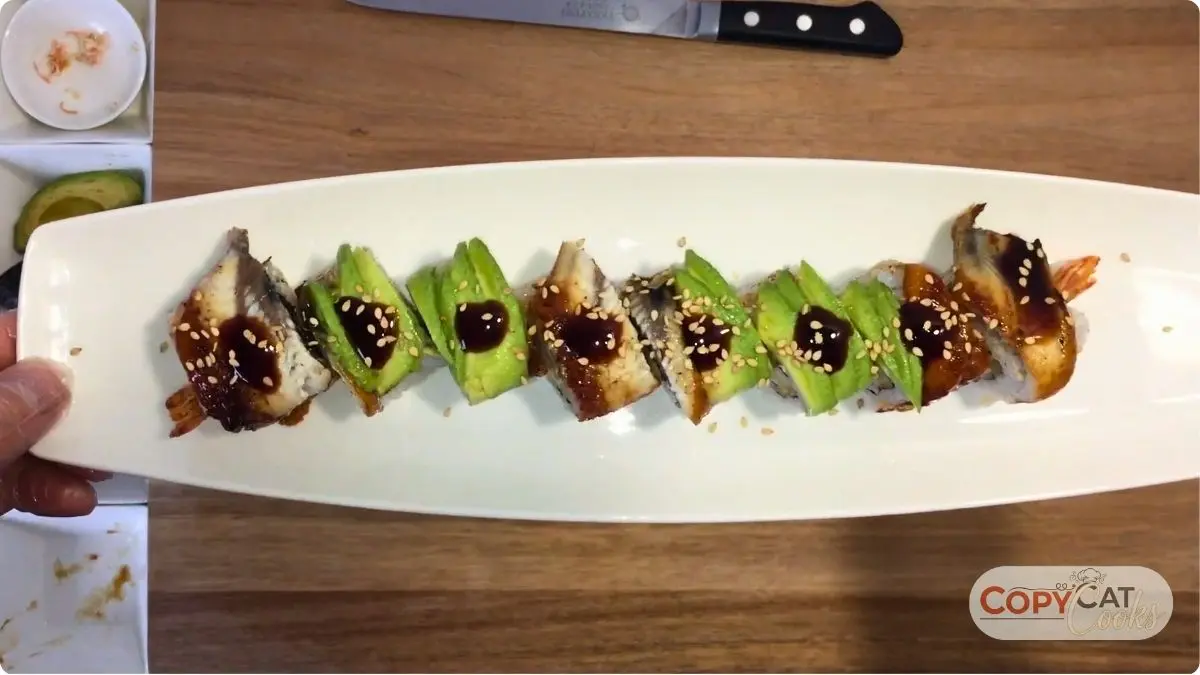
Arrange thin avocado slices across the top of your roll, overlapping them slightly in a shingled pattern to mimic dragon scales. This is where your dragon roll gets its iconic appearance and name.
Step 7: Set the Avocado
Place the bamboo mat back over the avocado-covered roll and apply gentle, even pressure to help the avocado adhere to the rice. This ensures your scales won’t slide off when cutting.
Step 8: Slice with Precision
Using a very sharp knife dipped in water, slice the roll into 8 equal pieces with a smooth, single motion for each cut. Wipe and re-dampen your knife between cuts to maintain clean edges.
Step 9: Artistic Plating
Arrange the pieces on a serving plate with the dragon’s “body” curved elegantly. Position pieces strategically so shrimp tails create the illusion of a dragon’s head and tail for maximum visual impact.
Step 10: Final Flourishes
Drizzle eel sauce in an artistic zigzag pattern across the pieces, followed by thin lines of spicy mayo. Sprinkle toasted sesame seeds over the top and serve with pickled ginger and wasabi on the side.
Customization and Pairing Ideas for Your Dragon Roll
1. Spicy Dragon Variation: Transform your copycat Benihana dragon roll recipe into a fiery version by adding sriracha-infused cream cheese inside the roll and topping with extra spicy mayo mixed with chili oil. This customization appeals to heat lovers while maintaining the original’s elegant presentation.
2. Protein Alternatives: If unagi isn’t available or preferred, substitute with imitation crab (kani), cooked lobster tail, or even teriyaki chicken for a fusion twist. Smoked salmon also works beautifully, offering a completely different flavor profile while keeping the dragon aesthetic intact with the avocado scales.
3. Tropical Dragon Roll: Add thin mango slices alongside or in place of avocado for a sweet, fruity dimension that pairs wonderfully with the savory shrimp tempura. The golden mango creates stunning visual contrast and introduces a Caribbean-meets-Japanese fusion element.
4. Vegetarian Dragon Option: Create a plant-based version using crispy sweet potato tempura or panko-crusted tofu as the protein base. Combine with asparagus, pickled radish, and cream cheese for substance, then top with avocado and a vegan eel sauce alternative made from tamari and maple syrup.
5. Beverage Pairings: Serve your Benihana dragon rolls recipe with chilled sake (try a crisp junmai or fruity ginjo), Japanese beer like Asahi or Sapporo, or green tea for traditional accompaniment. For wine lovers, an unoaked Chardonnay or sparkling Prosecco complements the rich flavors without overwhelming them.
6. Side Dish Combinations: Elevate your sushi experience by pairing with miso soup, edamame sprinkled with sea salt, seaweed salad for extra umami, or sunomono (cucumber salad) to cleanse the palate between bites of this rich roll.
7. Sauce Innovations: Beyond traditional eel sauce and spicy mayo, experiment with ponzu for citrus brightness, wasabi aioli for sharp heat, sweet chili sauce for Thai-inspired sweetness, or even a mango-habanero drizzle for adventurous palates seeking complexity.
Essential Tips for Perfect Dragon Rolls
1. Rice Temperature Matters: Use sushi rice at room temperature-never cold from the refrigerator. Cold rice doesn’t stick properly and creates a firm, unpleasant texture. Freshly made rice that’s cooled to room temperature spreads more easily and maintains the ideal slightly sticky consistency that holds your roll together without becoming mushy.
2. Knife Technique is Critical: The single most important tool for beautiful dragon roll presentation is a razor-sharp knife. Dip your blade in water before each cut, wipe it clean with a damp towel, then slice in one smooth, confident motion rather than sawing back and forth. This prevents the rice from tearing and keeps your avocado scales intact and pristine.
3. Avocado Ripeness Balance: Select avocados that yield slightly to gentle pressure but aren’t overly soft. Underripe avocados won’t slice thinly without breaking, while overripe ones turn mushy and brown quickly. The perfect avocado should feel like a ripe peach and slice into paper-thin pieces that remain intact during arrangement on your roll.
4. Tempura Timing Strategy: For the crunchiest results in your copycat Benihana dragon roll recipe, fry your shrimp tempura immediately before assembling or purchase high-quality pre-made tempura from a Japanese market. If making ahead, keep tempura in a warm oven (200°F) uncovered to preserve crispiness-never cover or it will steam and become soggy.
5. Rice Spreading Technique: Keep your hands constantly damp when handling sushi rice to prevent sticking. Use your fingertips to gently press rice onto the nori in a dabbing motion rather than smearing, which can make rice gummy. Aim for even thickness across the entire sheet, as thin spots create weak points where your roll might break during cutting.
6. Rolling Pressure Precision: When rolling your Benihana dragon rolls recipe, apply firm pressure but don’t squeeze aggressively. Think of it like a firm handshake-confident but not crushing. Too loose and your roll falls apart; too tight and rice squeezes out the sides while ingredients get compressed and lose their distinct textures.
7. Presentation Temperature: Serve your dragon rolls at cool room temperature rather than refrigerator-cold. Cold temperatures mute flavors and make the rice hard. If you’ve refrigerated components, remove them 15-20 minutes before serving to allow flavors to bloom and textures to return to their optimal state for the best dining experience.
Storage and Reheating Guidance
Store leftover dragon rolls in an airtight container lined with damp paper towels, refrigerated for up to 24 hours maximum. The tempura will lose crispness, so these are best enjoyed fresh. Never freeze assembled rolls as the texture deteriorates significantly. Consume within one day for food safety and optimal quality.
Common Queries and FAQs
Here, we’ve got you covered with some common questions about the Recipe that people often ask.
Q: Can I make dragon rolls without a bamboo mat?
A: Yes, though a bamboo mat provides the best control. You can use a silicone baking mat or even a thick kitchen towel covered in plastic wrap. The key is having something that helps you apply even pressure while rolling to create a tight, uniform cylinder.
Q: Where can I buy unagi (eel) for this recipe?
A: Japanese or Asian grocery stores typically carry frozen or vacuum-sealed cooked unagi. Many well-stocked supermarkets now have sushi-grade seafood sections that include eel. Online retailers also ship sushi-grade unagi directly to your door if local options are limited.
Q: What’s the difference between eel sauce and soy sauce?
A: Eel sauce (unagi tare) is a thick, sweet glaze made from soy sauce, mirin, sugar, and sake, specifically designed for sushi. It’s much sweeter and thicker than regular soy sauce. You can make it at home or purchase bottles at Asian markets-it’s essential for authentic Benihana dragon roll flavor.
Q: How do I prevent my sushi rice from being too sticky or mushy?
A: Use short-grain Japanese rice and rinse it thoroughly before cooking until water runs clear to remove excess starch. Follow package instructions for water ratios precisely, and after cooking, gently fold in seasoned rice vinegar while fanning to cool. Never stir aggressively or you’ll break the grains.
Q: Can I prepare components ahead of time?
A: Absolutely! Make sushi rice up to 4 hours ahead and keep covered at room temperature. Slice vegetables and avocado up to 2 hours before (squeeze lemon on avocado to prevent browning). Fry tempura last-minute for best crunch, or reheat pre-made tempura in a 375°F oven for 5 minutes.
Q: Is it safe to use raw fish in homemade sushi?
A: Only use fish labeled “sushi-grade” or “sashimi-grade” from reputable sources that follow proper freezing protocols to kill parasites. However, this copycat Benihana dragon roll recipe uses only cooked ingredients (shrimp tempura and cooked eel), making it safer for home preparation and suitable for those hesitant about raw seafood.
Q: Why does my roll fall apart when cutting?
A: This usually happens from insufficient rolling pressure, dull knives, or sawing motions when cutting. Ensure your roll is tight before cutting, use a very sharp knife dipped in water, and slice with one confident downward motion. Also check that your rice isn’t too dry or too wet, as both cause structural issues.
Benihana Dragon Roll Recipe
Ingredients
Equipment
Method
- Wrap your bamboo rolling mat completely in plastic wrap to prevent rice from sticking. Have a small bowl of water nearby for keeping your hands damp while working with sushi rice. Arrange all ingredients within easy reach for smooth assembly.
- Place half a sheet of nori, shiny side down, on your plastic-wrapped bamboo mat. With dampened hands, spread approximately 1 cup of seasoned sushi rice evenly across the entire nori sheet, leaving no gaps. The rice layer should be about ¼-inch thick for optimal texture.
- Carefully flip the nori sheet so the rice is now facing down on the bamboo mat. The nori should be on top, ready to receive your fillings. This uramaki (inside-out) technique is essential for authentic Benihana dragon rolls.
- Arrange 2 pieces of shrimp tempura horizontally across the center of the nori, with tails hanging slightly over the edge if desired. Place 2-3 slices of unagi alongside the shrimp, then add a line of julienned cucumber strips for that refreshing crunch.
- Lift the edge of the bamboo mat closest to you and begin rolling away from your body, using firm but gentle pressure. Tuck the initial edge tightly to create a compact cylinder. Continue rolling while maintaining even pressure until you’ve formed a complete cylinder. Remove the mat.
- Arrange thin avocado slices across the top of your roll, overlapping them slightly in a shingled pattern to mimic dragon scales. This is where your dragon roll gets its iconic appearance and name.
- Place the bamboo mat back over the avocado-covered roll and apply gentle, even pressure to help the avocado adhere to the rice. This ensures your scales won’t slide off when cutting.
- Using a very sharp knife dipped in water, slice the roll into 8 equal pieces with a smooth, single motion for each cut. Wipe and re-dampen your knife between cuts to maintain clean edges.
- Arrange the pieces on a serving plate with the dragon’s “body” curved elegantly. Position pieces strategically so shrimp tails create the illusion of a dragon’s head and tail for maximum visual impact.
- Drizzle eel sauce in an artistic zigzag pattern across the pieces, followed by thin lines of spicy mayo. Sprinkle toasted sesame seeds over the top and serve with pickled ginger and wasabi on the side.
Video
Notes
Mastering this Benihana dragon roll recipe at home transforms you from sushi enthusiast to skilled sushi chef capable of restaurant-quality creations. With practice, the intricate assembly becomes second nature, and you’ll develop your own techniques for perfect avocado scales and tight rolls.
This copycat Benihana dragon rolls recipe proves that with quality ingredients, proper tools, and patience, you can recreate Japanese restaurant magic in your own kitchen. The satisfaction of slicing into your beautifully crafted dragon roll and watching guests’ faces light up is truly priceless.
Now gather your ingredients and start rolling-your dragon awaits! We’d love to hear how this recipe turns out for you! Give it a try, then drop a comment below to share your thoughts and tips with us.
looks like a healthy meal
it is a healthy meal